
Fulham, Hammersmith and Shepherd's Bush street by street
| Area | Homes you mostly find | What the surveyor checks first |
|---|---|---|
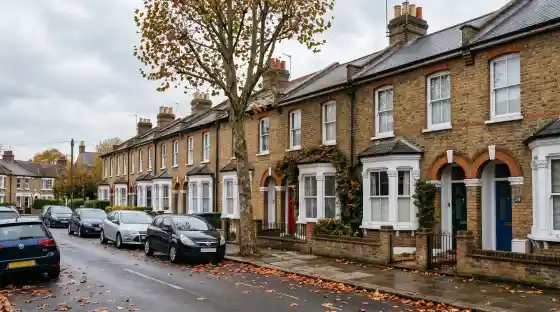
| Parsons Green and Hurlingham | Late Victorian and Edwardian terraces of two or three storeys with bay windows, many with lofts, side returns and basements added | Steel beams under knocked-through Hurlingham ground floors and the waterproofing of any basement dug beneath the terrace |
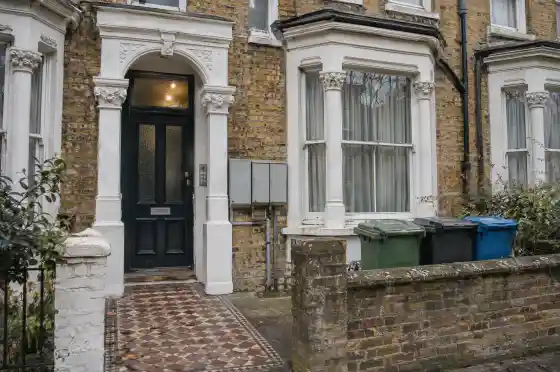
| Peterborough Estate and Munster Road | Red-brick terraces with decorative gables and tiled front paths, many split into an upper maisonette and a lower flat | Painted or rendered terracotta detail, fire separation in the shared hall and who repairs the roof under the leases |
| Sands End and Imperial Wharf | Newer apartment blocks on former industrial land beside the Thames, with older terraces behind Wandsworth Bridge Road | Flood Zone 3 status, the service charge and reserve fund, and the cladding paperwork for each Imperial Wharf block |
| Hammersmith Terrace and the Upper Mall | Georgian riverside houses, several listed, with gardens running down to the Thames wall | Damp and timber decay in ground floors, air bricks blocked by raised paths, and listed building consent for past works |
| St Peter's Square and Ravenscourt Park | Regency stucco villas round a garden square and larger Victorian houses ringing Ravenscourt Park | Cracked stucco and rusting iron fixings behind cornices, and the conservation area rules on front elevations |
| Brook Green and West Kensington | Victorian villas, red-brick mansion blocks near Queen's Club and big Barons Court houses split into flats | Mansion block flat roofs, communal drains and lightwells, plus the lease terms for each converted Gunterstone Road flat |
| Wormholt and the White City Estate | Inter-war council housing: cottage-style Wormholt houses and the brick walk-up blocks of the White City Estate | Original roof coverings, replaced windows and, in White City flats, the council's planned major works and the service charge |
Victorian terraces cut in two
47.5% of the homes on the Hammersmith and Fulham council tax list were built before 1900, against 20.8% across London. With the Edwardian streets of Parsons Green added, 54.9% predate 1919, so a surveyor in SW6 or W6 starts with chimney stacks, lime pointing, slate roofs and the shallow footings under each bay. Only 12% of homes date from 1945 to 1982, and outside the White City Estate the report rarely deals with concrete frames.
Flats and maisonettes make up 76.1% of the stock, and the 2021 Census found 24.5% of Hammersmith and Fulham households living in part of a converted or shared house. Most of those homes are Fulham terraces split into an upper maisonette and a lower flat, where fire separation in the shared hall, sound through the old joists and the freeholder’s consent for past work all belong in the report. Leasehold sales made up 72.9% of the total in the year to September 2026, so the lease plan and the service charge history matter as much as the brickwork. Private renting covers 36.4% of Hammersmith and Fulham households, and a flat offered for sale in Shepherd’s Bush or West Kensington has often been tenanted for years, with the wear on kitchens, bathrooms and stairs that brings.
A flat sold for a median £575,000 and a terraced house for £1,345,000 in the twelve months to September 2026. At those prices a hidden defect in a shared Munster Road roof or a Hurlingham basement wall costs far more than the inspection, which is why a Level 3 survey in Hammersmith and Fulham suits most of these split and extended terraces. Over five years the borough median moved by -11.8%, but that follows the mix of flats and houses sold in Hammersmith and Fulham and says nothing about the value of a single Fulham house. Our guide to what a Level 3 survey includes shows how the inspection covers each part of a converted terrace.
The Thames on three sides
The river wraps round Fulham, Hammersmith and Sands End, and 54% of Hammersmith and Fulham lies in Flood Zone 3 on the Environment Agency map. Flood zones ignore defences such as the Thames Barrier and the walls along Fulham Reach, so the zone alone does not mean a Hammersmith and Fulham house floods. The GOV.UK long term flood risk check gives the risk for one address, including surface water after a summer storm in Shepherd’s Bush.
Basements dug under Hammersmith and Fulham terraces in Parsons Green and the lightwells of Brook Green mansion blocks are where water shows first, so the surveyor looks for tide marks, salts on the plaster and the state of any sump pump. Georgian houses on Hammersmith Terrace and the Upper Mall can hide decay in timber ground floors next to the Thames wall, so skirtings, floor voids and air bricks get a close look.
From Bishops Park to Old Oak: consent before change
The council’s conservation areas page says it has 44 conservation areas covering about half of Hammersmith and Fulham, with two more in the north run by the Old Oak and Park Royal Development Corporation. The national planning dataset records 47 names here and puts 51.3% of the borough inside one, the largest being Old Oak and Wormholt, Ravenscourt and Starch Green, Hurlingham and Bishops Park. Inside them the council applies extra controls to development, demolition, advertisements and works to trees, so a roof terrace or new front windows on a Hurlingham house may have needed consent the seller never obtained.
The National Heritage List holds 268 entries for Hammersmith and Fulham, clustered on the Hammersmith riverside and round St Peter’s Square. Any change to a listed Hammersmith and Fulham house on Hammersmith Terrace needs listed building consent, and for those homes the listed building survey reads the fabric with that consent in mind. Lofts, side returns and basements also need sign-off, and the council’s building control service keeps a searchable database of applications that your conveyancer can check for a Parsons Green address.
What the Fulham and Shepherd’s Bush inspection looks at
Loft conversions, side-return kitchens and basement digs are everywhere in the Hammersmith and Fulham terraces of SW6, and in them the surveyor looks for steel beams with no visible bearing, dormers built tight to the party wall and extension roofs with poor falls. On the Peterborough Estate in Hammersmith and Fulham, cement render or paint over soft red brick and terracotta can hide cracks and trap moisture, while timber-framed upper bays on Fulham terraces often move where they meet the main wall. Work to a shared wall should come with a party wall award made under the 1996 Act, and the extended property survey covers how each addition joins the original Hammersmith and Fulham house.
The EPC register rates 42.3% of Hammersmith and Fulham homes at D or below, which reflects solid walls, single-glazed sashes and old boilers in the Victorian stock. 8.6% of Hammersmith and Fulham homes sit at E, F or G, and under the minimum energy efficiency standard a privately let home must normally reach E, which matters if you plan to let a Brook Green flat.
Booking a survey for a split Fulham terrace
L3S London sends a fixed written fee for a Hammersmith and Fulham maisonette or mansion flat before anything is booked, set by the size of the home in the survey fee estimator. If you are buying one half of a Fulham conversion, ask the agent for access to the roof hatch in the other flat, or the Level 3 survey in Hammersmith and Fulham will mark the roof space as not inspected. Craven Cottage, Stamford Bridge and Loftus Road bring match-day parking restrictions to Hammersmith and Fulham streets in SW6 and W12, so choose another day for the visit.
The record behind a Hammersmith and Fulham survey
| Figure | Hammersmith and Fulham | London | What it means for the survey | Source and period |
|---|---|---|---|---|
| Homes built before 1900 | 47.5% | 20.8% | Nearly half the stock is Victorian or older, so Fulham and Hammersmith surveys start with lime mortar, slate roofs and shallow footings. | VOA, list at 31 Mar 2026 (96,270 homes) |
| Homes built before 1919 | 54.9% | 28.9% | Add the Edwardian streets of Parsons Green and the share passes half, all solid-walled houses with no cavity to insulate. | VOA, list at 31 Mar 2026 (96,270 homes) |
| Homes built 1945 to 1982 | 12% | 22.3% | Post-war building is thin on the ground outside White City, so concrete-frame defects are rarer here than brick and timber ones. | VOA, list at 31 Mar 2026 (96,270 homes) |
| Flats and maisonettes, share of homes | 76.1% | 57.5% | Three in four homes are flats, many of them halves of Fulham terraces counted separately by the Valuation Office Agency. | VOA, list at 31 Mar 2026 (96,270 homes) |
| Households in part of a converted or shared house | 24.5% | 11.1% | Households in split Victorian houses run at more than twice the capital's share, so fire separation and sound insulation come up on most Fulham flat surveys. | ONS Census 2021, 21 Mar 2021 (81,243 households) |
| Households renting privately | 36.4% | 30% | Many Shepherd's Bush and West Kensington flats for sale have been let, so wear in kitchens, bathrooms and stairs is worth checking. | ONS Census 2021, 21 Mar 2021 (81,244 households) |
| Share of sales that were leasehold | 72.9% | 50.8% | Most sales in SW6 and W6 are leasehold, so the lease plan, service charge and repair split matter as much as the walls. | HM Land Registry, sales Oct 2025 to Sep 2026 (1,414 sales) |
| Median price paid, flats and maisonettes | £575,000 | £425,000 | A Fulham or Hammersmith flat costs well above the capital's median, so a defect in a shared roof falls on a large purchase. | HM Land Registry, sales Oct 2025 to Sep 2026 (1,024 sales) |
| Median price paid, terraced houses | £1,345,000 | £585,000 | A whole Parsons Green or Brook Green terrace sells for more than twice the median flat, which justifies tracing every alteration. | HM Land Registry, sales Oct 2025 to Sep 2026 (358 sales) |
| Change in median price paid over five years | -11.8% | 1.4% | The five-year median for Hammersmith and Fulham moved with the mix of flats and houses sold; it is not the change in any one home's value. | HM Land Registry, Oct 2025 to Sep 2026 v Oct 2020 to Sep 2021 (4,351 sales) |
| Homes rated D or below | 42.3% | 45% | Solid brick walls, single-glazed sashes and old boilers keep many Hammersmith and Fulham homes at D or below. | EPC register, certificates to 12 Oct 2026 (82,959 homes) |
| Homes rated E, F or G | 8.6% | 10.5% | A flat rated E, F or G cannot normally be let in Hammersmith and Fulham until it reaches E, so check the certificate before buying to let. | EPC register, certificates to 12 Oct 2026 (82,959 homes) |
| Conservation areas (distinct names) | 47 | n/a | The dataset counts distinct names, so it differs from the council's own 44 plus two Old Oak areas; the council map settles any Fulham street. | MHCLG planning data, published Nov 2026 |
| Share of the borough inside a conservation area | 51.3% | n/a | Half the borough sits in a conservation area, from Bishops Park to Old Oak, so front windows and roof changes may need consent. | MHCLG planning data, published Nov 2026 |
| Share of the borough in Flood Zone 3 | 54% | n/a | The Thames bends round three sides of Hammersmith and Fulham; the zone ignores the river walls, so check each address on GOV.UK. | Environment Agency, published Nov 2026 |
| Listed building entries | 268 | n/a | Listed houses cluster on the Hammersmith riverside and round St Peter's Square, where most changes need listed building consent. | Historic England list, published Nov 2026 |
Data: Valuation Office Agency: Council Tax stock of properties 2026; ONS Census 2021; HM Land Registry Price Paid Data; Energy Performance of Buildings Register (domestic EPCs); planning.data.gov.uk: conservation areas (MHCLG); Environment Agency Flood Map for Planning (flood zones), via planning.data.gov.uk; Historic England National Heritage List for England, via planning.data.gov.uk. Open Government Licence v3.0.
Questions from Hammersmith and Fulham buyers
How are repairs usually split in an upper and lower Fulham maisonette?
In most Fulham conversions the lower flat has the garden and the upper maisonette sits under the roof, and the two leases often share the roof, front wall and foundations between them. Your Hammersmith and Fulham surveyor looks at the whole Munster Road or Parsons Green house as far as access allows, because a defect in the other half can land on you. Bring both Fulham leases to your conveyancer so the split can be checked against what the report finds.
Does Flood Zone 3 mean a Sands End flat will flood?
No. 54% of Hammersmith and Fulham is in Flood Zone 3, but the zones ignore defences such as the Thames Barrier and the river walls along Fulham Reach. The GOV.UK long term flood risk service gives the risk for the exact Sands End address, including surface water after heavy rain. Your surveyor checks lower floors, lightwells and any pump in the basement of the Sands End block.
Who handles planning for the Grand Union Canal area in the north of Hammersmith and Fulham?
The Old Oak and Park Royal Development Corporation, a separate planning authority since 1 April 2015. The council says the Grand Union Canal conservation area kept its protection under the transition, and the corporation designated the Cumberland Park Factory conservation area on Scrubs Lane on 27 February 2017. Ask your conveyancer to search with the right body for a home near Scrubs Lane or the canal.
What should a Hammersmith and Fulham buyer ask about a basement dug under a Parsons Green terrace?
Ask the seller for the planning consent, the completion record from the council's building control team, the waterproofing warranty and party wall awards made under the 1996 Act with both neighbours. A Level 3 survey in Hammersmith and Fulham records damp patches, salts on the plaster, cracks in the walls above and the state of any sump, but it cannot see the membrane behind the finishes.
Is a Level 3 survey needed for a Wormholt Estate cottage?
Not always. A 1920s or 1930s Wormholt house in fair condition may suit a Level 2 survey. Choose the deeper Hammersmith and Fulham report if the cottage has been extended, shows cracking, needs a new roof or is about to be altered, and compare the two in our Level 2 and Level 3 guide.
Sources
- Hammersmith and Fulham Council: conservation areas (checked 26 November 2026)
- Hammersmith and Fulham Council: map of the conservation areas (PDF) (checked 26 November 2026)
- Hammersmith and Fulham Council: building control (checked 26 November 2026)
- GOV.UK: check long term flood risk for an address (checked 26 November 2026)
- GOV.UK: domestic private rented property minimum energy efficiency standard, landlord guidance (checked 26 November 2026)
- Valuation Office Agency: Council Tax stock of properties 2026 (checked 26 November 2026)
- HM Land Registry: Price Paid Data (checked 26 November 2026)