
Southwark from the riverside wharves to Dulwich Wood
| Area | Homes you mostly find | What the surveyor checks first |
|---|---|---|
| Shad Thames and Bermondsey Wall | Victorian warehouses at Butler's Wharf and along Bermondsey Wall converted to flats from the 1980s, beside newer riverside blocks | Rusting iron and steel frames, leaking Shad Thames roof terraces, condensation round original loading openings |
| Bermondsey Street | Georgian and Victorian terraces and flats over shops in soft stock brick near Tower Bridge Road | Cement repointing on lime-laid brick, flat roofs over Bermondsey Street shop extensions, separation from the shop below |
| Trinity Church Square and Borough High Street | Georgian set pieces near Borough with parapets hiding the roofs, and older buildings along Borough High Street | Hidden valley gutters, timber lintels, and listed building consent for past changes around Trinity Church Square |
| Walworth, West Square and Elephant and Castle | Victorian terraces between large council estates, the West Square conservation area, new towers where the Heygate Estate stood | Section 20 major works on Walworth estates, cladding and building safety papers in the Elephant and Castle towers |
| Camberwell Grove and Grove Lane | Georgian houses stepping up the slope of Camberwell Grove and Grove Lane, many listed | Lead gutters behind parapets, spalling brick under cement pointing, movement where Camberwell Grove houses step uphill |
| Peckham, Rye Lane and Nunhead | Late Victorian terraces in Peckham and Nunhead, flats above shops on Rye Lane and Peckham High Street | Rear roofs seen only from upstairs windows, Rye Lane flats over commercial units, clay movement near Nunhead Cemetery trees |
| East Dulwich, Dulwich Village and Dulwich Wood | Late Victorian and Edwardian terraces off Lordship Lane and Northcross Road, older houses in Dulwich Village | East Dulwich dormer lofts and side returns on steel, chimney breasts removed below stacks, bays on clay |
Bankside, Bermondsey and Rotherhithe face the Thames, Camberwell and Peckham fill the middle, and Dulwich Wood closes Southwark off at the Sydenham ridge. A Level 3 survey in Southwark is therefore as likely to cover a Walworth estate flat or a Shad Thames warehouse as a Victorian house, and the inspection is planned around the building rather than the postcode.
A Southwark housing stock rebuilt after 1945
The Valuation Office Agency dates 22% of Southwark homes to before 1900, close to the capital’s 20.8%, but only 6.9% to the inter-war years against 22% across London. The gap was filled later: 27% of today’s homes went up between 1945 and 1982, on estates across Walworth, Bermondsey and Peckham, and 27.4% since 2000, around Elephant and Castle, Bankside and the riverside at Rotherhithe. For a Walworth or Elephant and Castle purchase that means concrete frames, flat roofs, communal heating and, in the newest towers, fire safety and cladding records as well as the flat itself.
Flats and maisonettes make up 77.9% of the Southwark stock, and the 2021 Census puts 64.4% of households in purpose-built blocks. On a post-war Walworth or Bermondsey block the surveyor looks for spalling concrete where rusting steel pushes the cover off, tired asphalt roofs, single glazing and old riser pipework, and notes that some 1960s blocks used asbestos boards in soffits and service ducts. Blocks at least 18 metres or 7 storeys high with two or more homes count as higher-risk buildings under the Building Safety Act, which brings extra duties for whoever manages the Elephant and Castle or Bankside tower you are buying into.
Warehouses, wharves and the tidal Thames in north Southwark
Another 2.9% of households live in converted warehouses, schools, churches and similar buildings, against 1.2% for the capital, and most of those are the Shad Thames, Butler’s Wharf and Rotherhithe granary flats. In those Shad Thames buildings, iron and steel frames rust where water reaches them, and rust expands, so a corroding beam end cracks the brick around it; roof terraces leak at their upstands, and balcony outlets that discharge down the face keep the walls below wet.
The Environment Agency map puts 45.2% of Southwark in Flood Zone 3, because so much of SE1 and SE16 is low riverside ground. The zone ignores the Thames Barrier and the river walls, which do protect Bermondsey and Rotherhithe, so read it as the land the river would reach without them. Check the address on the GOV.UK long term flood risk service, ask the insurer early, and expect the surveyor to look hard at ground-floor and basement flats in the Rotherhithe and Bermondsey wharves.
Leaseholds, estates and Southwark Council as freeholder
Leasehold made up 74.5% of Southwark sales in the year to September 2026, and 39.7% of households rent socially, against 23.1% for the capital. Ex-council flats bought under right to buy stay leasehold with Southwark Council as freeholder, so when it renews a roof or windows on a Walworth or Peckham estate the cost reaches you through the service charge after section 20 consultation. On a Walworth estate the report records the condition of the roofs, windows and communal parts the surveyor can see, and the flat and conversion survey is built around exactly those shared parts.
The median price paid in Southwark was £525,000, against £518,000 across London, while terraced houses in East Dulwich, Camberwell and Peckham went for a median £875,000. Over five years the median was 4.5% lower, but medians move with the mix of homes sold, so a year heavy with Elephant and Castle flat sales pulls it down without any house losing value.
Southwark conservation areas, listed houses and pub Article 4s
planning.data.gov.uk holds 53 named conservation area records for Southwark, while the council’s conservation areas page counts 48 and notes that an Article 4 direction covers several of them. The largest by area are Dulwich Wood, Dulwich Village, Camberwell Grove, Nunhead Cemetery and Holly Grove, with Borough High Street, Bermondsey Street, Rye Lane Peckham, West Square and Nunhead Green among the rest. The national dataset also maps Article 4 areas over individual Southwark pubs such as the Asylum Tavern, the Ancient Foresters and the Bunch of Grapes, which matters if you are buying a flat above one.
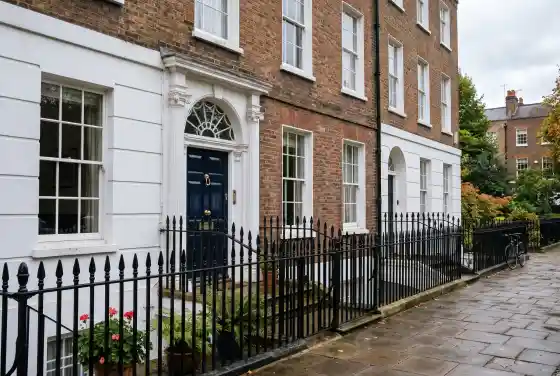
Historic England lists 919 entries in the borough, including the Georgian houses of Camberwell Grove and Trinity Church Square, where cement pointing holds water in soft brick that then spalls in frost and repairs need listed building consent. Past decisions for any address are on Southwark planning, and our guide to property law for buyers explains conservation areas, listing and Article 4 directions.
Terraces on clay from Peckham to East Dulwich
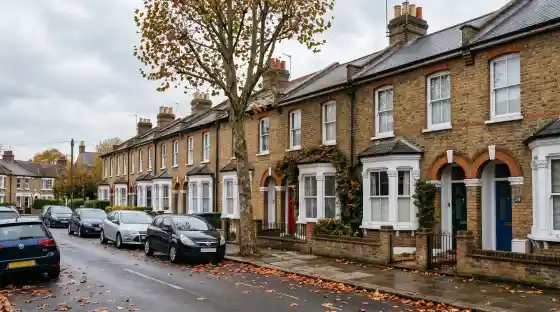
South of Camberwell the houses sit on clay under shallow stepped brick footings, and the bays, rear additions and garden walls near trees in Peckham, Nunhead and East Dulwich show movement first. Most East Dulwich terraces off Lordship Lane have had a dormer loft and a side-return kitchen on steel, so a Southwark Level 3 survey of one checks where that steel bears and whether a chimney breast has gone from below a stack. Search the Southwark building control register for the completion certificate before exchange, and use the period house survey or, for a Rye Lane flat over a shop, the mixed-use property survey.
The energy register rates 35.2% of Southwark homes D or below, lower than the capital because so many flats are recent, but a Nunhead or Peckham terrace with solid walls and single-glazed sashes usually falls in that group. Peckham and East Dulwich terraces rarely have a side passage, so rear roofs and extensions are viewed from upstairs windows or with a pole camera.
Booking a Southwark inspection
Tell L3S London whether the Southwark address is a Bermondsey warehouse flat, an estate maisonette or an East Dulwich terrace, and we confirm a fixed written fee set by its size. For a Bankside or Rotherhithe tower, ask the concierge or managing agent to book roof and plant room access, because a roof the surveyor cannot reach is rated NI with the reason given.
How Southwark's homes compare, figure by figure
| Figure | Southwark | London | What it means for the survey | Source and period |
|---|---|---|---|---|
| Homes built before 1900 | 22% | 20.8% | Southwark's pre-1900 homes cluster in Bermondsey, Borough, Camberwell and Peckham: lime, parapets and slate. | VOA, list at 31 Mar 2026 (151,430 homes) |
| Homes built 1919 to 1939 | 6.9% | 22% | Far below the capital: few inter-war semis here, so the borough's houses are mostly Victorian or Edwardian. | VOA, list at 31 Mar 2026 (151,430 homes) |
| Homes built 1945 to 1982 | 27% | 22.3% | The post-war estates of Walworth, Bermondsey and Peckham: concrete, flat roofs and communal heating. | VOA, list at 31 Mar 2026 (151,430 homes) |
| Homes built in 2000 or later | 27.4% | 18.5% | Elephant and Castle, Bankside and Rotherhithe blocks: fire safety, cladding papers and service charge budgets. | VOA, list at 31 Mar 2026 (151,430 homes) |
| Flats and maisonettes, share of homes | 77.9% | 57.5% | Nearly four in five homes here are flats, so the block is inspected as closely as the flat. | VOA, list at 31 Mar 2026 (151,430 homes) |
| Households in a purpose-built block of flats | 64.4% | 40.3% | Purpose-built blocks dominate from Bermondsey to Peckham, so roofs, lifts and windows set the service charge for years. | ONS Census 2021, 21 Mar 2021 (130,818 households) |
| Households in a converted former school, church, warehouse or similar | 2.9% | 1.2% | Well above the capital: the Shad Thames and Bermondsey warehouse flats, with iron frames and big openings. | ONS Census 2021, 21 Mar 2021 (130,818 households) |
| Households in social rented homes | 39.7% | 23.1% | Many Southwark flats on sale are ex-council, with the council as freeholder recharging major works. | ONS Census 2021, 21 Mar 2021 (130,820 households) |
| Share of sales that were leasehold | 74.5% | 50.8% | Three in four sales were leasehold: read the lease, the service charge and planned works. | HM Land Registry, sales Oct 2025 to Sep 2026 (2,102 sales) |
| Median price paid, all homes | £525,000 | £518,000 | This median is mostly a leasehold flat price, close to the capital-wide figure. | HM Land Registry, sales Oct 2025 to Sep 2026 (2,102 sales) |
| Median price paid, terraced houses | £875,000 | £585,000 | Terraces in East Dulwich, Camberwell and Peckham sell well above the capital median, so a missed fault costs more. | HM Land Registry, sales Oct 2025 to Sep 2026 (411 sales) |
| Change in median price paid over five years | -4.5% | 1.4% | The median moves with the mix of flats and houses sold from SE1 to SE22, not the value of a given home. | HM Land Registry, Oct 2025 to Sep 2026 v Oct 2020 to Sep 2021 (5,855 sales) |
| Homes rated D or below | 35.2% | 45% | Lower than the capital because so many Bankside and Elephant and Castle flats are recent; the Victorian terraces still rate poorly. | EPC register, certificates to 12 Oct 2026 (115,748 homes) |
| Share of the borough in Flood Zone 3 | 45.2% | n/a | Much of SE1 and SE16 is Flood Zone 3, which ignores the Thames Barrier: check basements and ground floors. | Environment Agency, published Nov 2026 |
| Conservation areas (distinct names) | 53 | n/a | From Bermondsey Street to Dulwich Village, check the map before changing windows, roofs or front walls. | MHCLG planning data, published Nov 2026 |
| Listed building entries | 919 | n/a | Listed Georgian houses in Camberwell Grove and Trinity Church Square need consent for most repairs. | Historic England list, published Nov 2026 |
Data: Valuation Office Agency: Council Tax stock of properties 2026; ONS Census 2021; HM Land Registry Price Paid Data; Energy Performance of Buildings Register (domestic EPCs); Environment Agency Flood Map for Planning (flood zones), via planning.data.gov.uk; planning.data.gov.uk: conservation areas (MHCLG); Historic England National Heritage List for England, via planning.data.gov.uk. Open Government Licence v3.0.
Questions from Southwark buyers
What does a Level 3 survey look at in a Shad Thames warehouse flat?
The flat in full and as much of the building as can be reached: windows, roof terraces, stairs and the outside walls of the Butler's Wharf or Bermondsey Wall block from the ground. A Southwark Level 3 survey of a converted warehouse looks for condensation round old loading doors, rust in iron or steel frames and balcony outlets that soak the brick below, then lists the service charge papers your solicitor should get.
What are the risks of buying an ex-council flat on a Walworth or Peckham estate?
The flat may be sound while the bill is not, because 39.7% of Southwark households rent socially and the council remains freeholder on many estates. When it renews roofs, windows or heating, leaseholders pay a share after section 20 consultation, so ask Southwark Council for planned major works and any estimates before exchange.
Are Bermondsey and Rotherhithe homes at risk of flooding?
The Environment Agency places 45.2% of the borough in Flood Zone 3, a map that ignores the Thames Barrier and the river walls along Bermondsey and Rotherhithe. Check the address on the GOV.UK long term flood risk service, and expect the surveyor to comment on any basement, ground-floor flat and drainage near the river at Rotherhithe.
Do I need consent to change a flat over a Peckham pub or a Rye Lane shopfront?
Possibly, because planning.data.gov.uk maps Article 4 direction areas over individual Southwark pubs such as the Asylum Tavern and the Ancient Foresters, as well as several conservation areas. Before buying a flat above a pub or a Rye Lane shop, ask your conveyancer to check those directions and the planning history on the council's planning pages.
What paperwork should an extended East Dulwich terrace come with?
Ask the East Dulwich seller for the planning decision for any dormer, the building control completion certificate, the steel calculations and any party wall awards. The council's building control register shows what was signed off at a Lordship Lane address, and the report flags where steels, removed chimney breasts or a knocked-through side return were seen.
Sources
- Valuation Office Agency: Council Tax stock of properties 2026 (checked 26 November 2026)
- Southwark Council: conservation areas (checked 26 November 2026)
- Southwark Council: planning (checked 26 November 2026)
- Southwark Council: search the building control register (checked 26 November 2026)
- planning.data.gov.uk: Article 4 direction areas (checked 26 November 2026)
- GOV.UK: check long term flood risk (checked 26 November 2026)
- GOV.UK: criteria for being a higher-risk building (occupation phase) (checked 26 November 2026)
- HM Land Registry: Price Paid Data (sales dated 1 October 2025 to 30 September 2026, published to 3 November 2026; Open Government Licence v3.0) (checked 26 November 2026)
- GOV.UK Get energy performance of buildings data: domestic EPCs, England and Wales (certificates lodged 2008 to 12 October 2026; Open Government Licence v3.0) (checked 26 November 2026)