
Walthamstow, Leyton, Leytonstone and Chingford: what stands where
| Area | Homes you mostly find | What the surveyor checks first |
|---|---|---|
| Walthamstow Village (Orford Road, St Mary's Church) | The oldest cottages, almshouses and houses in the borough, inside the Walthamstow Village and Orford Road conservation areas | Lime mortar, soft brick, and Article 4 limits on windows and doors |
| Warner estates, Walthamstow and Leyton | Warner homes that look like terraced houses but hold an upstairs and a downstairs flat, each with its own front door | The shared roof, front wall, chimney stack and drain, and who pays under each lease |
| Bakers Arms and central Leyton | Late Victorian and Edwardian two-storey terraces between Lea Bridge Road and Hoe Street | Outrigger junctions, suspended timber floors and bays on shallow footings |
| Leytonstone | Victorian and Edwardian terraces and villas, part of them in the Leytonstone conservation area | Article 4 frontage controls, front walls disturbed by roots and leaking drains |
| Highams Park Estate | Interwar houses in the Highams Area of Special Character | Clay tile roofs without underlay, steel windows and the 2019 Article 4 direction |
| Chingford Green and Chingford Mount | Larger Edwardian houses near Epping Forest, with interwar semis and short terraces | Pebble-dash and render cracking, wall tie rust in early cavity walls |
| Lloyd Park and Forest School | Edwardian streets and older houses in two more of the borough's conservation areas | Original sash windows and slate roofs where Article 4 applies |
Century-old terraces and Warner homes
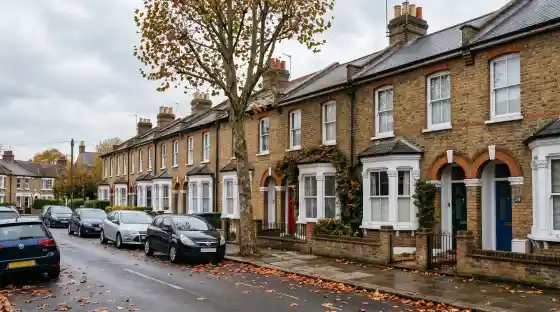
Waltham Forest was built mostly before the First World War: 44.6% of its homes predate 1919, against 28.9% across London, and 24.1% are Victorian. In Walthamstow, Leyton and Leytonstone that means street after street of two-storey terraces with bay windows, slate roofs, solid brick walls and timber ground floors. Terraced houses make up 40.3% of the Waltham Forest stock, so the usual purchase is an E17 or E10 terrace with an outrigger at the back and a loft added later. Waltham Forest Council’s design guidance names the distinctive local types as Victorian and Edwardian terraces, Warner housing, Abraham flats and later inter-war developments.
The Warner homes are the local oddity: the Warner estate built them in Walthamstow and Leyton as an upstairs and a downstairs flat inside one terraced shell, each with its own front door. Flats and maisonettes now make up 48.4% of Waltham Forest homes, and flats in converted houses hold 12% of households, above the capital’s rate. In a Warner pair or a flat cut from a Leytonstone terrace, the roof, front wall, chimney stack and drains are shared, so a leak above the top flat can be a joint cost under both leases. On a Warner pair, our flat and conversion survey reads the shared structure along with your part.
Leyton’s Lea-side streets and the flood maps
The west of Waltham Forest runs down to the River Lea and its marshes below Leyton and Walthamstow. Flood Zone 3 covers 5.7% of the borough and Flood Zone 2 12.5%, and both Environment Agency maps ignore defences. For a house near Lea Bridge Road or the Leyton marshes, check the address on the GOV.UK long-term flood risk service, and expect us to look for tide lines on plaster, damp at the base of walls and slow gullies.
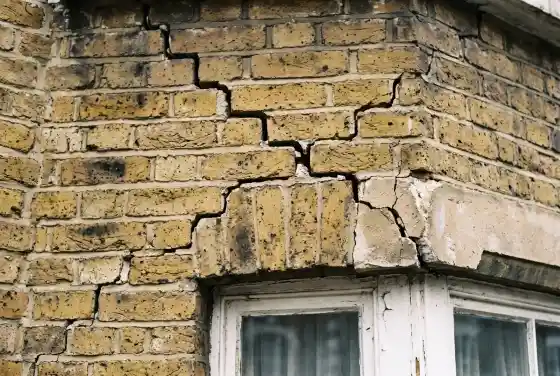
Chingford and most of Walthamstow sit higher, and there the problems are the clay and the trees. Across Waltham Forest, bays settle on shallow footings, lintels over Walthamstow windows corrode or sag, and front walls lean where roots and leaking drains have disturbed the ground.
Conservation areas, Article 4 and the Highams direction
Waltham Forest has 15 conservation areas, from Bakers Arms, Browning Road and Leucha Road to Lloyd Park, Walthamstow St James and Woodford Green. Waltham Forest Council says Article 4 directions apply across most of them and lists directions for Chingford Green, Forest School, Leytonstone, Orford Road, Ropers Field, Thornhill Road, Woodford Green, Browning Road and Walthamstow Village. On a Leytonstone or Orford Road house, replaced sashes, a new front door or a rooflight may have needed planning permission, and the report lists any we see for your conveyancer.
Waltham Forest handles the Highams Park Estate differently: the council made an Article 4(1) direction for the Highams Area of Special Character on 7 August 2019. A borough-wide direction also means turning a Leyton or Walthamstow house into a small HMO needs planning permission. The council’s conservation areas and listed buildings page has the maps, and its Article 4 directions page sets out each one.
Prices and leases on E17 and E10 streets
Waltham Forest terraces sold at a median of £690,000 against £585,000 across London, so a missed structural defect on a Leyton terrace is an expensive one. Flats sold at a median of £402,000, and 44% of Waltham Forest sales were leasehold, mostly Warner and converted flats where the lease, service charge and shared roof decide your costs. The Waltham Forest median rose 11.7% over five years, a change in the mix of homes sold rather than in the value of any one E17 house.
On the EPC register 50.2% of Waltham Forest homes rate D or below, which on a Walthamstow terrace means solid walls, single glazing and an older boiler. A landlord cannot let most homes rated below E under the minimum energy efficiency standard, so the report flags what a Leyton buy-to-let would need.
What a Waltham Forest Level 3 survey looks at
On a Walthamstow terrace the outrigger comes first: it often sits on shallower footings than the main house, under its own roof, with the kitchen or bathroom inside, so we look for cracks at the junction and rot where air bricks are blocked. Patios laid above the damp-proof course, masonry paint and cement render trap water in Leyton’s solid brick walls. In the 1930s Highams Park and Chingford houses, clay tile roofs often lack underlay, pebble-dashed fronts crack, steel windows rust and early cavity walls can show horizontal cracks from rusting wall ties. Our period house survey covers the Victorian terrace in full, and the Level 2 or Level 3 comparison explains why a Waltham Forest Level 3 survey suits a house of that age.
Booking a survey from Chingford to Leyton
L3S London’s RICS-qualified surveyor inspects and signs each Waltham Forest report to the RICS Home Survey Standard, and a Warner flat and a Chingford semi of the same size get the same written fixed fee. Tell us before the visit whether it is a whole Walthamstow house, a Warner flat or a later conversion, and whether we can reach the other flat’s loft, then send the address. The council’s building control service handles building regulations applications and site visits, so ask the seller of a Walthamstow house for the completion certificate on any loft or extension.
Waltham Forest by the numbers, beside the capital
| Figure | Waltham Forest | London | What it means for the survey | Source and period |
|---|---|---|---|---|
| Homes built before 1919 | 44.6% | 28.9% | Far above the capital's share: solid walls, lime mortar, slate roofs and shallow footings across Walthamstow and Leyton. | VOA, list at 31 Mar 2026 (111,800 homes) |
| Homes built before 1900 | 24.1% | 20.8% | A quarter of homes are Victorian, so timber ground floors and blocked air bricks come up on most E17 and E10 terraces. | VOA, list at 31 Mar 2026 (111,800 homes) |
| Terraced houses, share of homes | 40.3% | 24.4% | Terraces are the typical purchase here, usually with an outrigger and a loft or rear extension added later. | VOA, list at 31 Mar 2026 (111,800 homes) |
| Flats and maisonettes, share of homes | 48.4% | 57.5% | Half the Waltham Forest stock is flats, many of them Warner homes or flats cut from a Victorian terrace. | VOA, list at 31 Mar 2026 (111,800 homes) |
| Households in part of a converted or shared house | 12% | 11.1% | Flats inside converted houses run above the capital's share; fire separation, sound and the freeholder's consent matter. | ONS Census 2021, 21 Mar 2021 (102,901 households) |
| Median price paid, terraced houses | £690,000 | £585,000 | Leyton and Walthamstow terraces sell above the capital's terrace median, so a structural defect is costly to miss. | HM Land Registry, sales Oct 2025 to Sep 2026 (1,007 sales) |
| Median price paid, flats and maisonettes | £402,000 | £425,000 | A Warner flat or converted flat sells near this level, before any share of a shared roof repair. | HM Land Registry, sales Oct 2025 to Sep 2026 (877 sales) |
| Change in median price paid over five years | 11.7% | 1.4% | The five-year move reflects the mix of homes sold, not the value of any single E17 house. | HM Land Registry, Oct 2025 to Sep 2026 v Oct 2020 to Sep 2021 (6,207 sales) |
| Share of sales that were leasehold | 44% | 50.8% | Leasehold sales are mostly Warner and converted flats, so the lease, service charge and shared structure all matter. | HM Land Registry, sales Oct 2025 to Sep 2026 (2,124 sales) |
| Homes rated D or below | 50.2% | 45% | Half the rated homes are D or below: solid brick walls, single glazing, old boilers and the MEES letting rules. | EPC register, certificates to 12 Oct 2026 (88,507 homes) |
| Share of the borough in Flood Zone 3 | 5.7% | n/a | Flood Zone 3 ignores defences and lies mostly by the Lea and its marshes; check the address on GOV.UK. | Environment Agency, published Nov 2026 |
| Share of the borough in Flood Zone 2 or 3 | 12.5% | n/a | A wider band of Leyton and Lea Bridge land, where we look for tide lines on plaster and slow drains. | Environment Agency, published Nov 2026 |
| Conservation areas (distinct names) | 15 | n/a | From Bakers Arms to Woodford Green, most of them with Article 4 directions on windows, doors and roofs. | MHCLG planning data, published Nov 2026 |
| Listed building entries | 118 | n/a | Concentrated in Walthamstow Village and Chingford, where listed building consent covers inside and out. | Historic England list, published Nov 2026 |
Data: Valuation Office Agency: Council Tax stock of properties 2026; ONS Census 2021; HM Land Registry Price Paid Data; Energy Performance of Buildings Register (domestic EPCs); Environment Agency Flood Map for Planning (flood zones), via planning.data.gov.uk; planning.data.gov.uk: conservation areas (MHCLG); Historic England National Heritage List for England, via planning.data.gov.uk. Open Government Licence v3.0.
Questions from Waltham Forest buyers
What is a Warner flat, and does it need a Level 3 survey?
Warner homes in Walthamstow and Leyton were built by the Warner estate as pairs of self-contained flats inside what looks like a terraced house. The two Warner flats share a roof, front wall and often a drain, so a Level 3 survey in Waltham Forest inspects the whole building as far as access allows. The Waltham Forest report then sets out the shared Warner repairs and the lease questions for your solicitor.
Will an Article 4 direction stop me changing the windows on my Walthamstow house?
An Article 4 direction will not stop you, but on a Walthamstow Village house you may need planning permission first. Waltham Forest Council lists Article 4 directions for Chingford Green, Forest School, Leytonstone, Orford Road, Ropers Field, Thornhill Road, Woodford Green, Browning Road and Walthamstow Village. Your conveyancer can confirm whether a past window change on an Orford Road house had consent.
Is Highams Park in a conservation area?
The Highams Park Estate is an Area of Special Character rather than a conservation area. Waltham Forest Council made an Article 4(1) direction for it on 7 August 2019, which brings some changes to the houses under planning control. Ask your conveyancer which parts of that Highams direction affect any loft or porch you plan.
Are Leyton and Leytonstone houses at risk of flooding?
Flood Zone 3 covers 5.7% of Waltham Forest and Flood Zone 2 12.5%, mostly by the River Lea and its marshes, and both maps ignore defences. Enter the Leyton or Leytonstone postcode into the GOV.UK long-term flood risk service before you offer. On a Leyton terrace your surveyor notes tide lines on plaster and slow drainage at the base of the walls.
Can I let a Waltham Forest house in Leyton as an HMO without permission?
No: Waltham Forest Council has an Article 4 direction across the whole borough, so changing a house to a small HMO needs planning permission. If a Leyton terrace is already let as an HMO, ask the seller for the permission and any licence. Our Waltham Forest report notes the fire doors, alarms and extra kitchens we see in a Leyton HMO, so your conveyancer knows what to check.
Sources
- Waltham Forest Council: conservation areas and listed buildings (checked 26 November 2026)
- Waltham Forest Council: local Article 4 directions (checked 26 November 2026)
- Waltham Forest Council: building control (checked 26 November 2026)
- Let's Talk Waltham Forest: character-led design and heritage (Local Plan guidance) (checked 26 November 2026)
- VOA: Council Tax stock of properties 2026 (checked 26 November 2026)
- HM Land Registry: Price Paid Data (checked 26 November 2026)
- GOV.UK: Get energy performance of buildings data (checked 26 November 2026)
- GOV.UK: Check your long term flood risk (checked 26 November 2026)
- GOV.UK: minimum energy efficiency standard, landlord guidance (checked 26 November 2026)
- Historic England: search the National Heritage List (checked 26 November 2026)